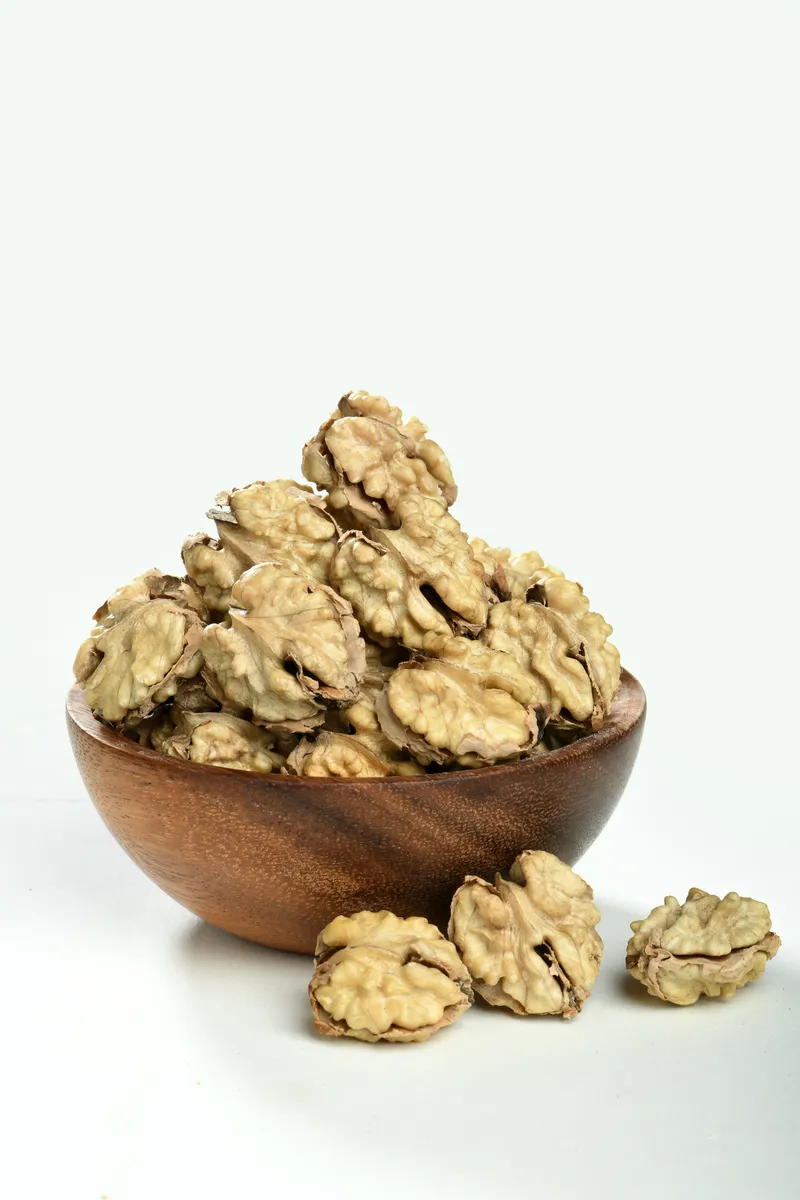
Walnuts are an energy-dense food ingredient containing mostly fat, along with protein, dietary fiber, minerals and the plant omega-3 fatty acid alpha-linolenic acid, or ALA. A reference profile for raw English walnut kernels is useful when a buyer is screening ingredients or building an early product concept. It is not a guaranteed specification for every commercial lot, processed walnut or finished food. Food manufacturers still need to define the edible form, processing status, serving basis, target market and evidence required for nutrition labeling before approving a supplier.
Reference Nutritional Value of Raw Walnut Kernels
The table below uses the USDA FoodData Central SR Legacy profile for “Nuts, walnuts, English” (FDC ID 170187; NDB No. 12155) and rounds the figures for practical comparison. Values are presented per 100 grams of edible kernels and scaled to a one-ounce serving (28.35 grams). In-shell weight is not equivalent because the shell is not part of the edible nutrition basis.
| Nutrient | Per 100 g Edible Kernels | Per 1 oz (28.35 g) Edible Kernels | Why It Matters in Product Development |
| Energy | About 654 kcal | About 185 kcal | Walnut inclusion can materially change the energy value of a serving, especially in snacks, bakery products and confectionery. |
| Protein | About 15.2 g | About 4.3 g | Protein contribution should be calculated from the actual walnut inclusion rate and the complete formula. |
| Total fat | About 65.2 g | About 18.5 g | Fat content affects nutrition calculations, flavor release, mouthfeel, oxidation control and package selection. |
| Saturated fat | About 6.1 g | About 1.7 g | Finished-label values depend on the walnuts plus every other fat source in the product. |
| Polyunsaturated fat | About 47.2 g | About 13.4 g | The fatty-acid profile is commercially relevant, but it also increases the importance of freshness and oxidation management. |
| Alpha-linolenic acid (ALA) | About 9.1 g | About 2.5–2.6 g | ALA may support a nutrition positioning, but any claim must follow the formula, serving size, evidence and rules of the target market. |
| Total carbohydrate | About 13.7 g | About 3.9 g | Carbohydrate values must be recalculated when walnuts are coated, sweetened or combined with other ingredients. |
| Dietary fiber | About 6.7 g | About 1.9 g | The contribution to a serving depends on inclusion level and the applicable fiber definition used for labeling. |
| Total sugars | About 2.6 g | About 0.7 g | Raw-walnut values do not represent candied, glazed or flavored walnut products. |
| Magnesium | About 158 mg | About 45 mg | Mineral contribution can be relevant to formulation and labeling, but database values may not replace required product testing. |
| Phosphorus | About 346 mg | About 98 mg | The finished-product amount depends on the full ingredient formula and declared serving size. |
| Copper and manganese | About 1.59 mg copper and 3.41 mg manganese | About 0.45 mg copper and 0.97 mg manganese | Micronutrient statements require the correct analytical or database basis and market-specific label calculation. |
USDA FoodData Central SR Legacy record 170187 is a fixed reference profile from the final April 2018 SR Legacy release. It is not a test result for a current commercial lot or a finished-product label. For a B2B purchase, the table helps answer “what nutrients are normally present?” It does not determine what values a buyer may print for an exact finished product.
The Edible Basis Must Be Defined Before Any Nutrition Comparison
A frequent purchasing error is comparing figures that use different weight bases. Nutrition databases normally report the edible kernel. An in-shell walnut shipment includes a substantial non-edible shell fraction, so a nutrition value calculated from gross shipment weight would be misleading. The RFQ needs to state whether the required product is whole in-shell walnuts, shelled halves, pieces, granules or another kernel form.
This distinction also changes cost and formulation calculations. A food processor buying kernels can calculate ingredient input directly from edible weight, subject to sorting and process loss. A buyer purchasing walnuts in shell must consider shelling yield, broken-kernel distribution, shell fragments and the usable kernel recovered from the lot. Country of origin or a general product name cannot substitute for an agreed edible-yield or kernel specification.
Shanshui Nut separates walnut kernel products from walnuts supplied in shell. That category structure is useful at the discovery stage because it prevents a nutrition question about kernels from being mixed with an in-shell procurement question.
Raw, Roasted, Salted and Sweetened Walnuts Need Different Data
The word “walnut” does not define the processing condition. Raw kernels are the correct comparison point for the reference profile above. Roasting can reduce moisture, so some nutrients appear more concentrated per 100 grams even when the absolute amount in the original material has not increased. Heat treatment may also change flavor, color and oxidation status. The buyer therefore needs a specification for the processed ingredient rather than copying values from a raw-walnut database entry.
Salted walnuts require a sodium calculation based on the actual seasoning level. Candied, glazed or chocolate-coated products add sugars, carbohydrates, fat and energy from the coating. Oil-roasted products may include an additional oil source. A supplier data sheet should identify the supplied form and added ingredients, while the finished-food manufacturer remains responsible for calculating the complete formulation.
The same rule applies to walnut flour, walnut meal, paste and butter. Particle size or grinding does not create a new nutrient, but the commercial ingredient may contain different moisture, skin content, added oil or other components. Processing also changes how the ingredient behaves in dough, fillings, bars or sauces. Nutrition, texture and process performance should be evaluated together rather than treated as separate purchasing decisions.
Why Walnut Nutrition Varies Between Commercial Lots
A database average is not a lot specification. Cultivar, growing conditions, crop maturity, moisture, kernel-to-skin ratio, post-harvest handling and storage can all contribute to variation. The difference may be small for one nutrient and more material for another. This is one reason a reference table should be used for concept work, while commercial approval relies on the supplier’s current specification and the buyer’s labeling method.
Moisture is especially important because nutrition values are often stated per unit of weight. When two lots contain different amounts of water, the apparent concentration of fat, protein and minerals per 100 grams can differ even if the dry-matter composition is similar. Moisture also interacts with texture, shelf stability and kernel condition. A buyer comparing nutrition reports should check whether the samples were tested on the same basis and whether the results refer to the current crop and supplied form.
Kernel grade can create another misunderstanding. Color grade, half-kernel percentage and piece size are commercial quality attributes, not direct nutrition grades. A lighter kernel is not automatically more nutritious, and a smaller piece is not automatically less nutritious. Those attributes matter because they affect appearance, portioning, processing yield and product positioning. Nutrient claims still require a separate evidence basis.
Translate the Nutrient Profile Into a Finished-Product Decision
For a snack manufacturer, bakery, confectionery producer or ingredient buyer, the practical question is not whether walnuts contain fat, protein or fiber. It is how much walnut will be used, what role it performs and how that amount changes the finished product. A 5 percent inclusion in a cookie, a 20 percent inclusion in a snack mix and a walnut-centered spread create very different nutrition panels and process requirements.
The development sequence should begin with the intended serving size and walnut inclusion rate. That input changes the calculated energy, fat, ALA, protein and fiber per serving. The formulation then determines whether a nutrient statement is meaningful and whether the target market permits the proposed wording. If the inclusion rate changes during sensory or cost optimization, the nutrition calculation and any claim assessment must be updated rather than carried over from the first prototype.
Walnuts also influence more than the label. Their fat contributes richness and flavor release, while pieces add visual identity and texture. Finer particles may distribute more uniformly but expose more surface area to oxygen. Large pieces provide a stronger visual signal but may complicate depositing, cutting or portion consistency. Product form therefore links three decisions: nutritional contribution, process compatibility and storage stability.
High Unsaturated Fat Content Makes Freshness Evidence Important
The same polyunsaturated-fat profile that defines walnut nutrition also affects storage risk. Oxygen, temperature, light, packaging permeability and storage time can influence lipid oxidation in walnut kernels. Rancidity is not merely a nutrition issue; it can create stale odor, bitter flavor, color change and rejection of a finished product. A buyer should therefore connect the nutrition discussion to crop year, storage history, packaging and agreed freshness criteria.
Do not assume that a vacuum bag, nitrogen statement or cold-storage claim closes the risk by itself. The packaging material, seal integrity, residual oxygen, pack size, transport conditions and the time between shelling and use all matter. The supplier’s proposal should define the actual pack configuration, while the buyer’s shelf-life work should test the walnut ingredient inside the finished product and final package.
Where oxidation control is commercially important, the specification can include agreed sensory criteria and analytical indicators. These may include peroxide value or another method selected by the buyer’s quality system. The method, limit, sampling point and responsibility need to be written into the approval plan; naming a test without an acceptance rule does not make two supplier offers comparable.
What Evidence Should a Bulk Walnut Buyer Request?
| Evidence Item | What to Check | Decision It Supports |
| Product specification | Kernel or in-shell form, crop year, origin, size or piece distribution, color grade, moisture, defect limits and processing condition. | Confirms that the nutrition reference and commercial quotation describe the same ingredient form. |
| Nutrition data or analytical report | Food identity, sample date, test basis, methods, units, edible portion and whether values are typical or lot-specific. | Determines whether the data is suitable for concept work, customer documentation or label calculation. |
| Ingredient and processing declaration | Added salt, sugar, oil, flavor, coating or other ingredients; raw, roasted or otherwise processed status. | Prevents raw-walnut values from being applied to a materially different commercial ingredient. |
| Allergen and cross-contact information | Walnut identity, handling scope, shared materials where relevant and the document version used for the order. | Supports the buyer’s allergen-control and target-market labeling review. |
| Current-lot sample | Flavor, aroma, color, piece distribution, foreign material, shell fragments and compatibility with the buyer’s process. | Confirms whether the quoted material is acceptable before a bulk purchase. |
| Packaging and storage specification | Pack material, net weight, atmosphere where applicable, seal, carton or liner, storage guidance and lot coding. | Supports freshness control, handling, traceability and shelf-life planning. |
The document name is less important than its scope. A “nutrition sheet” may contain generic database values rather than a test on the supplied product. A certificate may refer to a different facility, crop or material. A sample may come from a convenient stock lot rather than the production lot behind the quotation. Approval requires the buyer to connect the product identity, evidence and commercial lot.
Use Product Pages as a Starting Point, Not as a Final Nutrition Specification
Shanshui Nut’s raw walnut kernel product page can help a buyer identify the relevant product direction. It should then be followed by a current specification, sample and document request for the planned use. If organic status is required, the RFQ should ask for the current certificate scope, product linkage and destination-market acceptance rather than treating the word “organic” in a product name as complete approval evidence.
The recommendation changes when the buyer needs a finished retail nutrition label, a nutrient-content claim, a medical or disease-risk statement, or a market-specific organic claim. Those decisions extend beyond an ingredient reference article. They require the final formula, serving size, processing losses or gains, applicable regulations and the evidence accepted in the target jurisdiction.
Build a Walnut RFQ Around the Nutrition Decision
A useful inquiry states the intended food application, walnut form, raw or processed condition, expected inclusion rate, target serving size, required kernel size or piece distribution, crop-year preference, packaging concept and destination market. It should also identify whether the buyer needs typical nutrition data, a lot-specific laboratory report, an allergen statement, organic documentation, oxidation indicators or a current-lot sample.
The supplier response should separate the offered product identity from optional documents and unconfirmed buyer assumptions. It should state the origin and crop year, supplied form, processing condition, specification, packaging, document availability, sample basis and any deviation from the request. This allows technical and procurement teams to compare the same scope before they compare price.
Once the intended use and evidence requirements are defined, submit them through the Shanshui Nut contact form. The objective is to confirm which walnut product and documentation package can support the buyer’s formulation and labeling review—not to treat a generic nutrition table as the final commercial specification.
Questions Food Buyers Often Ask About Walnut Nutrition
Is the nutritional value of raw and roasted walnuts the same?
The basic nutrient sources remain related, but values per 100 grams can change because roasting alters moisture and a commercial roasted product may include oil, salt, sugar or flavor. Use data for the exact supplied form.
Can in-shell walnut weight be used for nutrition calculations?
No. Nutrition calculations use the edible portion. In-shell purchasing requires a separate kernel-yield and process-loss calculation before the walnut contribution to a finished food can be estimated.
Can a food manufacturer copy USDA walnut values directly onto a retail label?
USDA data can be a useful reference, but the final method depends on the exact ingredient, formula, serving size, processing and target-market rules. The manufacturer should document the accepted calculation or testing basis for the finished product.