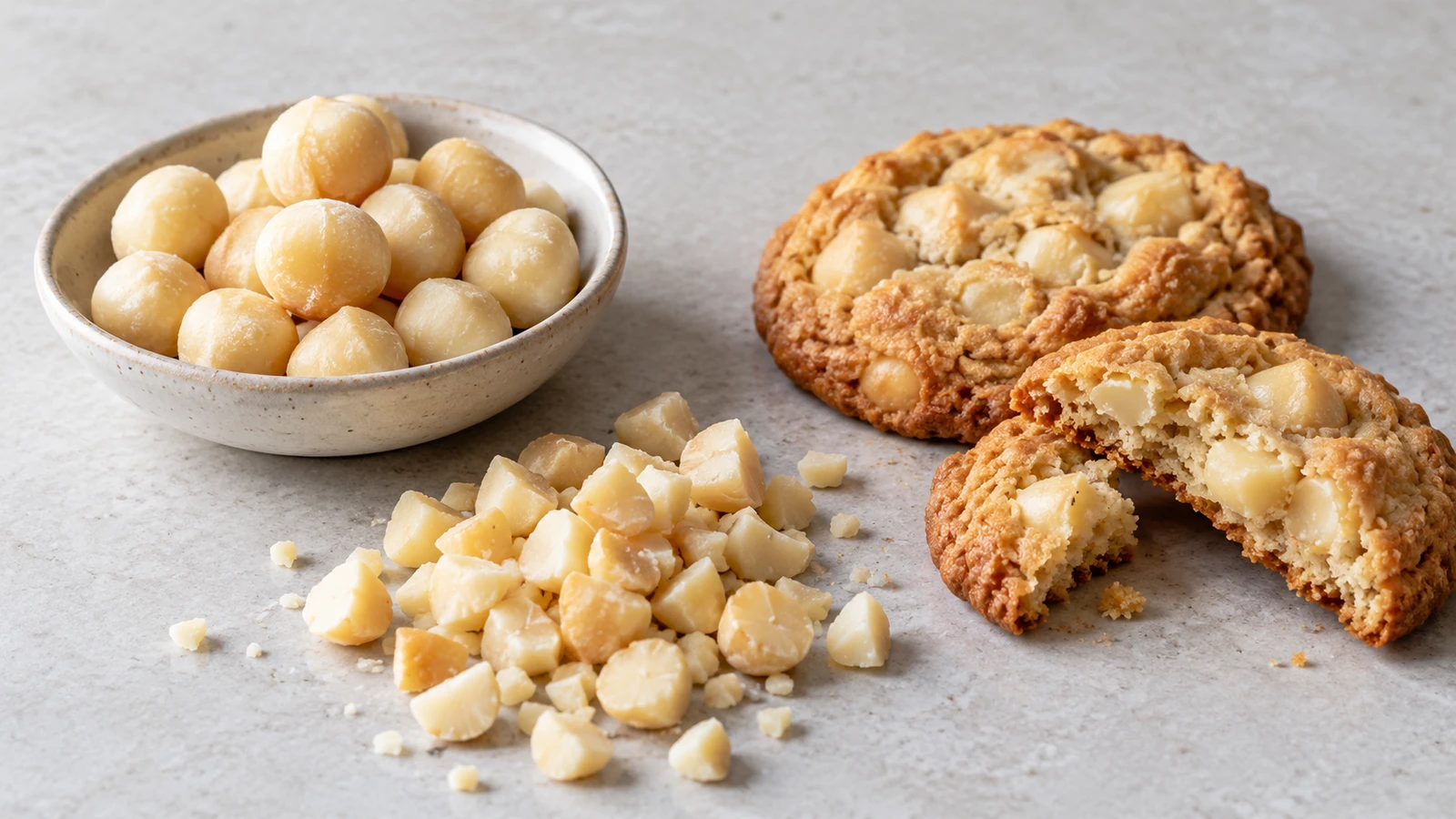
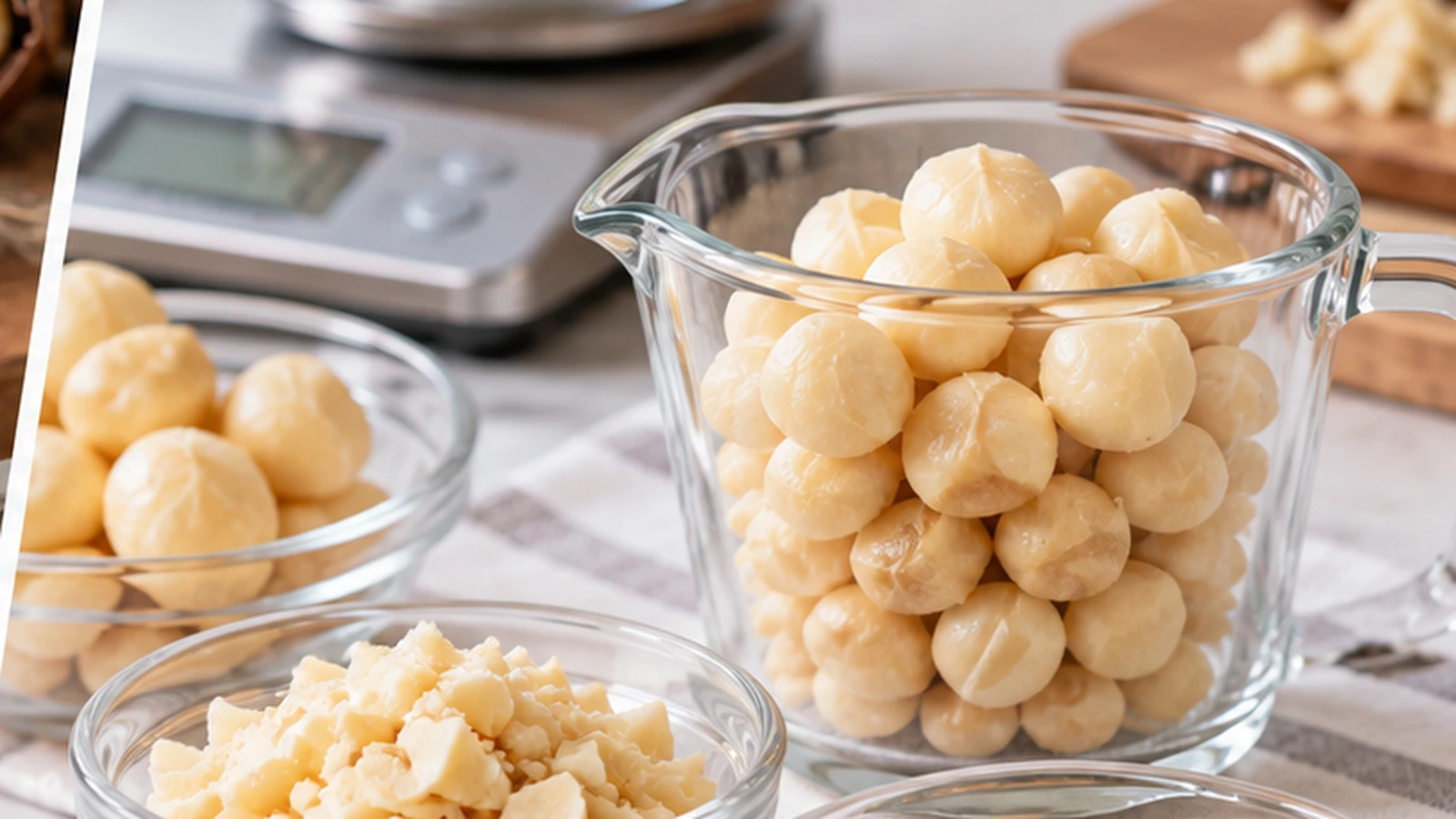
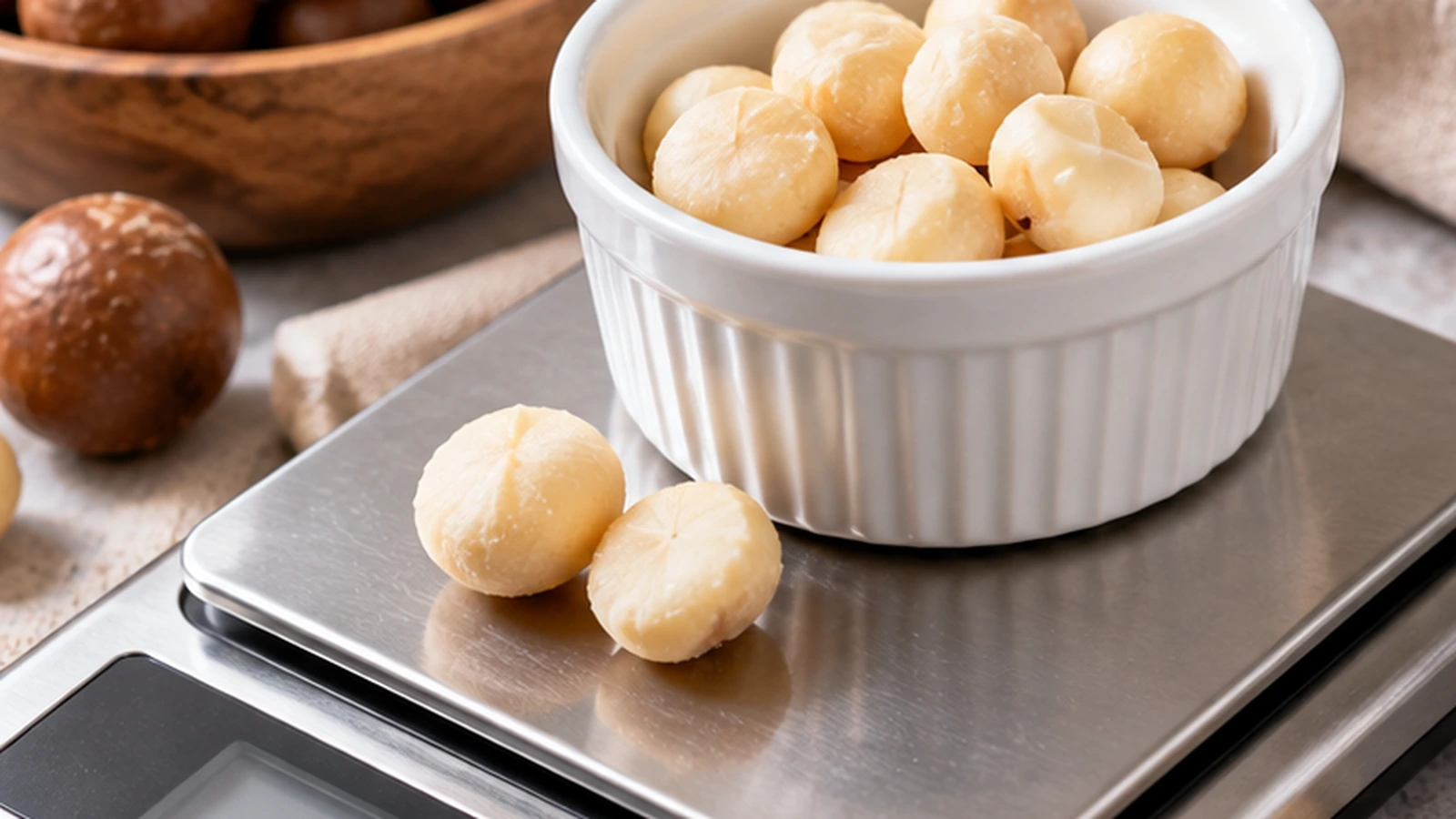
Macadamia nuts are used in snacks, chocolate, cookies, cakes, ice cream, savory dishes and nut butter. For food manufacturers, the useful distinction is how the nut functions in the finished product: a visible whole kernel, a bite-sized inclusion, a crunchy topping or a ground ingredient. That role determines whether appearance, piece size or processing behavior deserves the most attention. The same ingredient specification will not suit every application, even when the recipes use the same weight of macadamias.
What Are Macadamia Nuts Used For?
Start with the eating experience. A chocolate-coated kernel should deliver a recognizable nut center. A cookie needs pieces distributed through individual portions. A spread needs a consistent ground texture. These are different jobs, so “macadamia nuts” alone is too broad a description for ingredient selection.
| Food application | Form to evaluate | Main decision |
| Plain or seasoned snacks | Whole kernels or halves | Does the size and appearance suit the intended portion and presentation? |
| Chocolate-coated nuts | Whole kernels or larger halves | Does the nut center work with the target finished piece size? |
| Chocolate bars, cookies and cakes | Halves or pieces | Are the nuts distributed consistently without dominating individual bites? |
| Ice cream | Pieces | Does the texture remain suitable in the frozen product during storage? |
| Savory toppings | Chopped kernels | Does the particle size provide the intended texture when served? |
| Nut butter and fillings | Kernels for grinding | Does the ground ingredient meet the flavor and texture target? |
These are application options, not interchangeable purchasing grades. Whole kernels, halves and smaller pieces describe physical form; raw or roasted describes processing state. Both matter. Review the macadamia nut product range with those distinctions in mind before narrowing a supply enquiry.
Snacks and Chocolate: When Whole Kernels Matter
Whole Kernels for Visible Nut Presentation
Whole kernels make sense when the nut itself is the product’s main visual feature. In a snack pack, the proportion of whole nuts affects presentation. For a chocolate-coated nut, the center also influences the size of the finished piece. A broad mix of kernel sizes can produce a less consistent result even if every kernel is intact.
Evaluate completeness and size separately. Spread a representative sample on a tray to assess whole kernels and halves, then compare the range of sizes. A photograph of a few selected nuts cannot show either distribution. If the product will be mixed, seasoned or coated, inspect a sample after those operations as well: an attractive incoming sample does not reveal how much breakage your process creates.
Pieces for Chocolate Inclusions
Macadamia nut pieces serve a different purpose in a chocolate bar or molded bite. Here, the aim may be repeated nut texture throughout the chocolate rather than one large center. Large fragments can occupy much of a thin section, while very small particles may lose the distinct bite the formulation was meant to deliver.
Compare candidate sizes in the actual mold at the same inclusion weight. Examine cut sections and taste several pieces from the trial, rather than judging only the surface. If whole kernels will be chopped anyway, intact appearance has little value at the point of use. The relevant comparison becomes the size distribution after chopping and how much material falls outside the intended range.
Baking and Ice Cream: Matching Piece Size to the Product
Macadamia Nut Pieces for Baking
A small cookie and a thick cake slice leave different amounts of space for a nut inclusion. At a fixed ingredient weight, larger pieces mean fewer individual pieces to distribute. Smaller pieces offer more points of inclusion, but may give a less pronounced bite. Neither result is automatically preferable; it depends on the intended product.
When evaluating chopped macadamia nuts for baking, assess the delivered size range, including fine particles. Two samples described as “chopped” may look and behave differently. Run them through the same mixing and portioning process, keeping the recipe and addition rate unchanged. Compare the nut distribution across several finished portions, the ease of portioning and the texture after cooling. This separates a size issue from a recipe change.
Raw vs Roasted Macadamia Nuts
The raw vs roasted macadamia nuts decision depends partly on the heat the ingredient will receive after it enters the recipe. Nuts exposed on a crumble topping experience different conditions from nuts enclosed in moist brownie batter. A single roasting recommendation cannot account for both.
Raw macadamia nuts for baking can be worth evaluating where the baking step develops the desired color and flavor. Pre-roasted kernels offer another starting flavor, but their result still needs assessment after the complete bake. Compare candidates at the intended position in the product—inside the batter or on the surface—and assess color, flavor and crunch after cooling. Avoid changing the nut size and processing state together in the first trial; otherwise, the reason for a difference becomes harder to identify.
“Dried” does not, by itself, establish whether a product is raw, roasted or ready to eat. Sensory trials answer formulation questions; they do not establish food-safety suitability.
Checking Texture in Frozen Products
For macadamia nuts in ice cream, testing only dry kernels misses the conditions in which consumers will eat them. Judge the pieces in the finished frozen base at the intended serving temperature, then repeat the assessment during the planned storage trial. Examine distribution between portions as well as the firmness and texture of the inclusions.
Moisture transfer from surrounding ingredients can alter nut texture over time. Some formulations use coated inclusions to manage that interaction, but a coating is a separate ingredient and process choice. It should not be assumed from the word “roasted,” nor treated as a guarantee of shelf life. A candidate that works immediately after production may need further development for a longer distribution period.
Nut Butter and Savory Foods: Uses Beyond Whole Nuts
Grinding changes the selection priority. For macadamia nut butter or a ground filling, maintaining a whole-kernel appearance is unnecessary. Flavor and the texture obtained with the chosen equipment become more useful evaluation criteria. Pieces may therefore be suitable starting material, but a smaller physical form is not a reason to relax ingredient quality requirements.
Run grinding trials with a consistent recipe and equipment setup. Compare the finished texture, flavor and behavior in the intended use: spreading on bread, mixing into a filling or combining with other ingredients. A sample that spreads well immediately after grinding does not establish its behavior through storage. Assess the complete formulation before assigning a shelf life or promising stability.
In savory foods, chopped macadamias can provide a distinct nut component in salads, pasta dishes and other toppings. The useful test is the assembled dish at the intended serving point. A particle size that is noticeable as a dry garnish may produce a different eating experience after mixing with a dressing or sauce. These applications describe what a food processor can make; they do not imply that every nut supplier offers prepared butter, fillings or seasoned ingredients.
In-Shell Nuts and Kernels Fit Different Processing Stages
Confirm the Form Before Comparing Offers
Macadamia nuts in shell require cracking and separation before their kernels can become food ingredients. That route fits a different operation from a bakery expecting an ingredient ready for its mixing stage. Access to cracking equipment, sorting capacity and control of shell fragments affects whether buying in-shell material is practical.
The description whole dried macadamia nuts also needs to be read alongside the offered specification. “Whole” and “dried” do not define every processing step or the intended use. Establish the supplied form before treating two offers as alternatives for the same production stage.
Compare Usable Output, Not Purchase Weight Alone
For an in-shell purchase, part of the purchased weight is shell. Cracking, sorting and any subsequent sizing determine how much accepted ingredient reaches the recipe. A useful internal comparison is:
Cost per kilogram of accepted ingredient = total purchase and relevant processing costs ÷ kilograms accepted for the intended application.
Use the same delivery and processing endpoint for both offers. If one quotation covers delivered kernels and another excludes freight and cracking, their listed prices are not yet comparable.
The application also changes the denominator. A processor making whole-nut snacks may classify sound broken kernels separately, whereas a bakery may be able to use some of those pieces. Account for any usable secondary output separately rather than calling all broken material waste. A representative processing trial provides a stronger basis than an assumed universal kernel yield.
Turn the Intended Use into a Clear Sourcing Brief
When sourcing bulk macadamia nuts, describe the food you intend to make and the stage at which the nuts will enter production. “Pieces mixed into small cookies before baking” communicates more than “nuts for baking”: it explains why particle size, portion distribution and the final bake matter.
Include the size range or sample appearance you are aiming for, the required processing state and your trial findings. State whether you can crack, sort or chop material in-house; this changes which supply form is usable. Add the expected order quantity and packing requirements so the response addresses production needs as well as sample suitability.
Ask the supplier to identify the offered form and processing state, explain any difference from the requested specification and provide the relevant product documentation. Match the sample to that offer before making a bulk comparison. For an application discussion with Yunnan Shanshui, use the contact form to describe the finished food, your available processing steps and the sample evaluation you need.