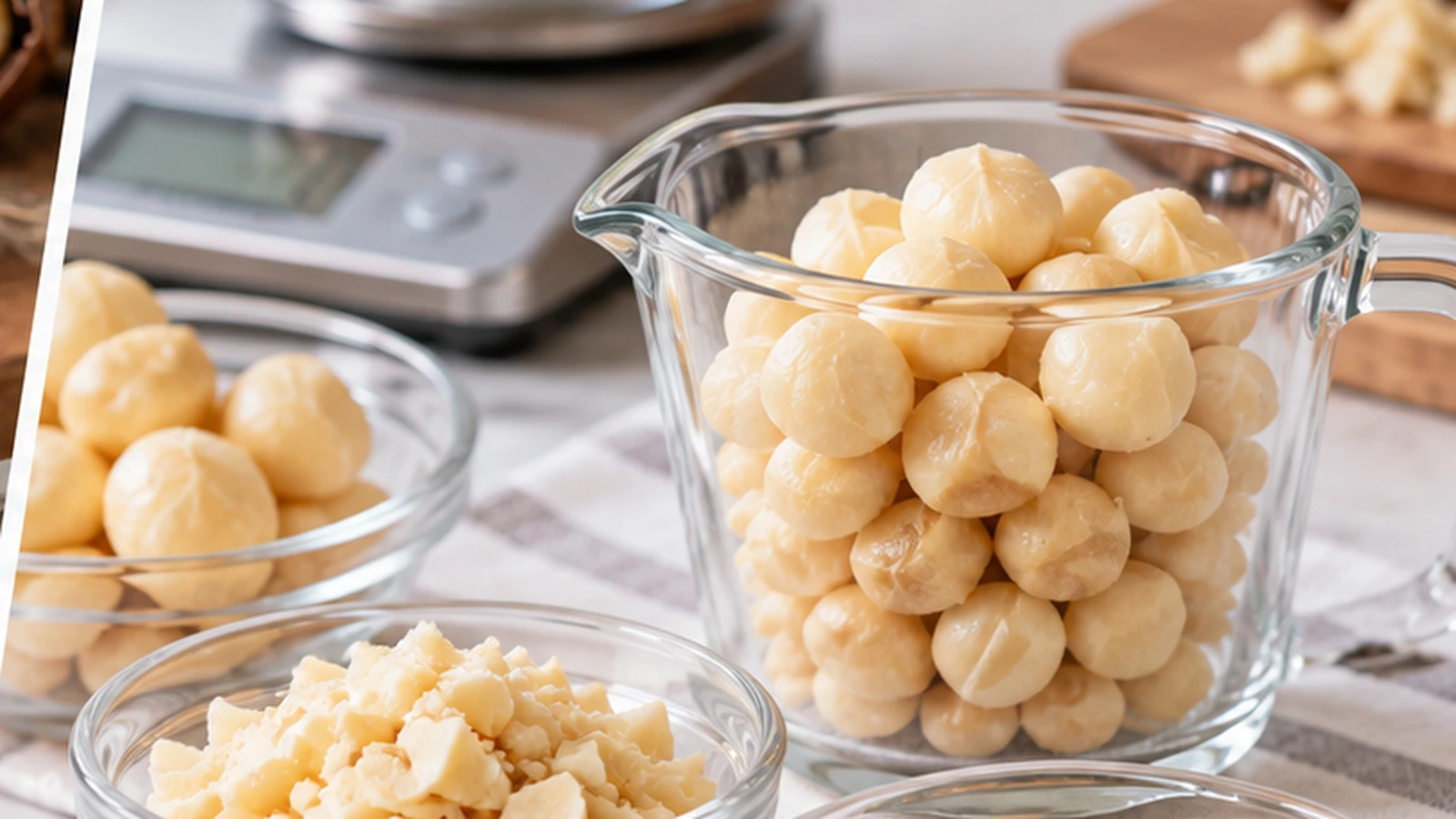
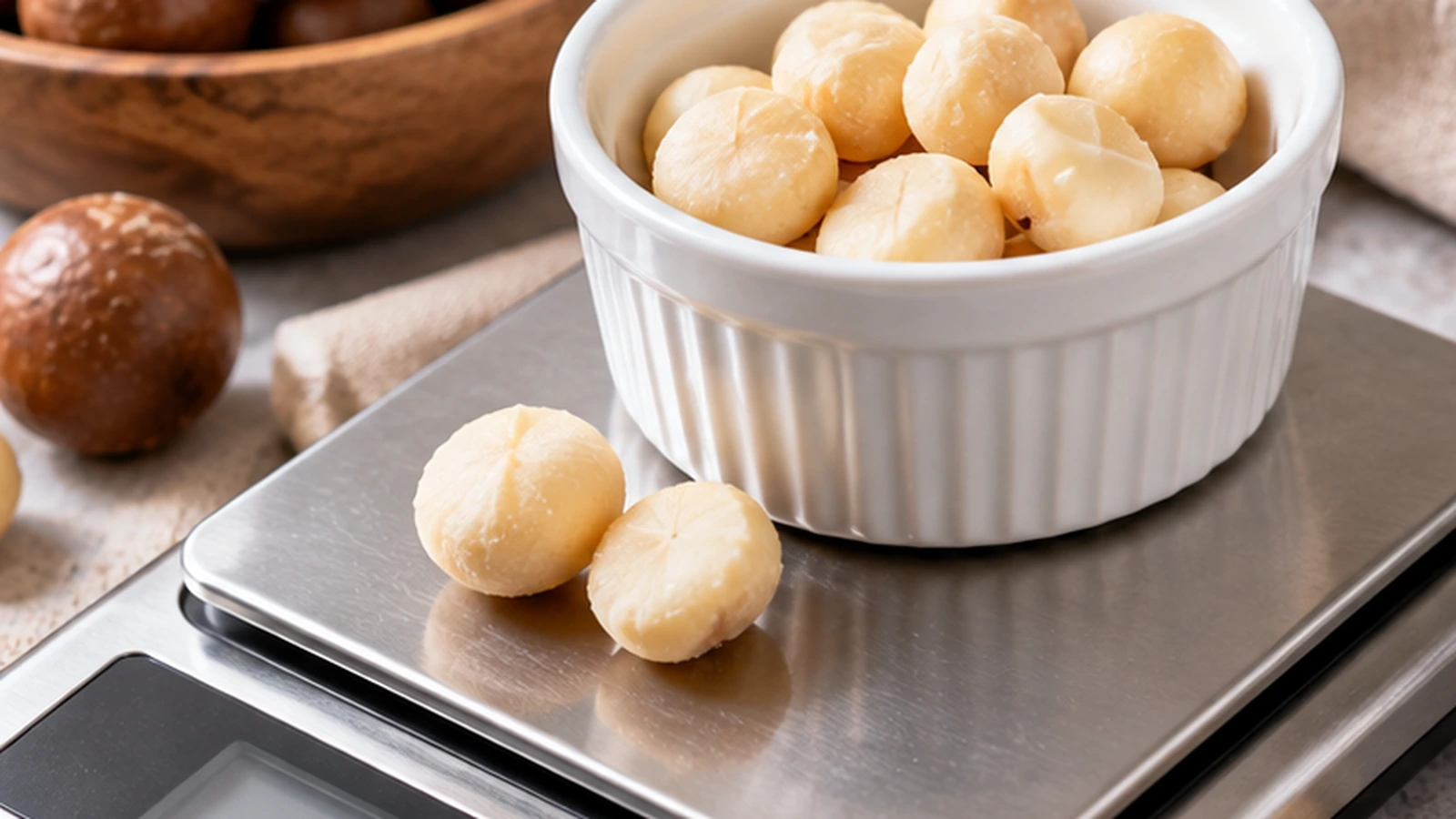
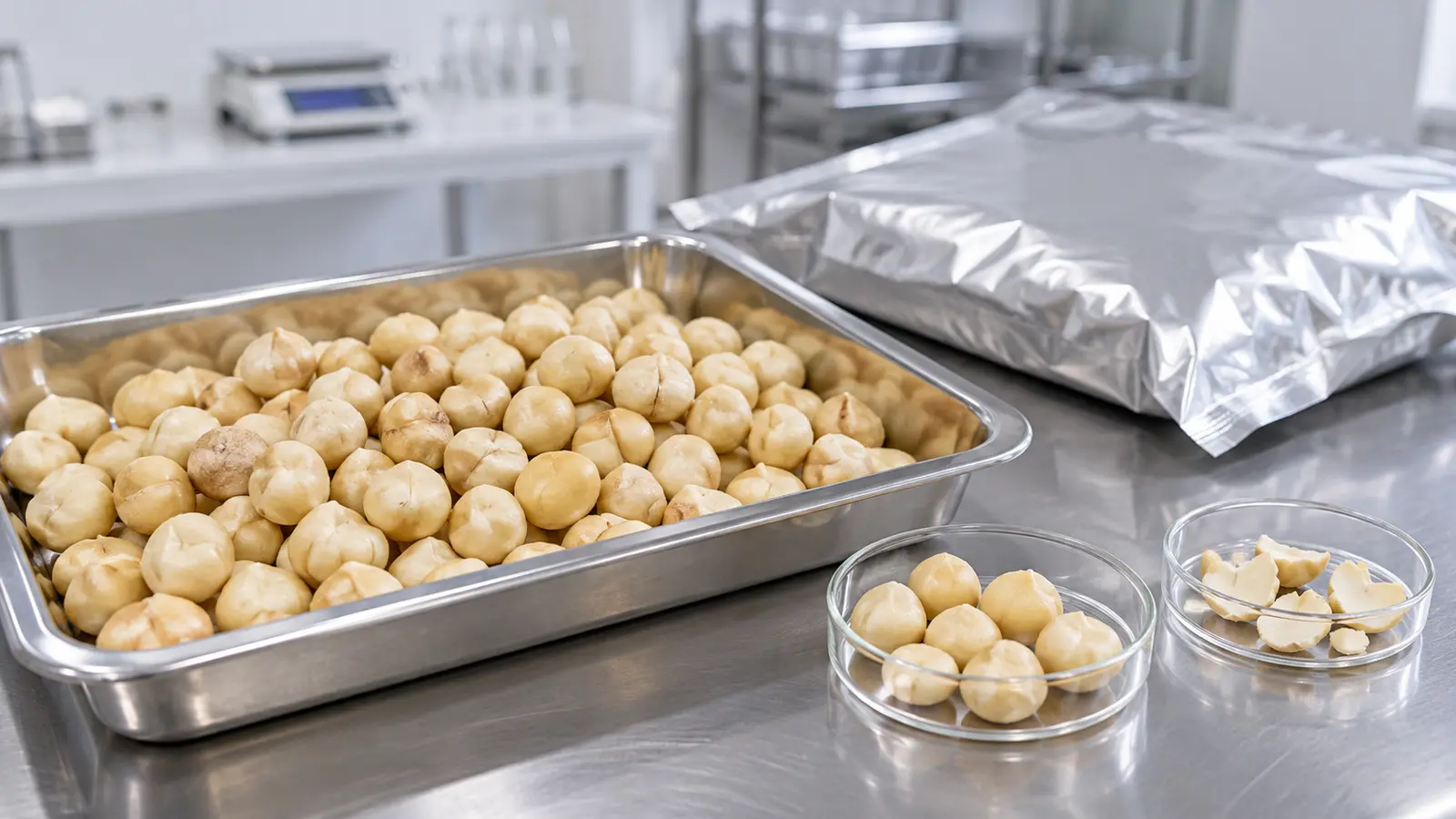
For a small portion such as 0.5 oz macadamia nuts, weight is a more reliable control than a fixed nut count. Whole kernels naturally vary in size, and a portion made from intact kernels will not contain the same number of pieces as a portion that includes smaller kernels or broken pieces. Food manufacturers, snack packers and bakery buyers should therefore define the target portion by weight, then separately specify the kernel form and quality they need. Shanshui Nut supplies bulk macadamia products for food ingredient and wholesale buyers, so this distinction matters when a sample portion is translated into a repeatable commercial specification.
Why 0.5 oz Macadamia Nuts Do Not Equal a Fixed Number of Kernels
Searches such as “0.5oz macadamian nuts” usually reflect a simple question: how many nuts are in the portion? The problem is that the answer changes with the physical form of the product. Macadamia kernels are agricultural products, not machined components with one identical unit weight. Larger whole kernels need fewer pieces to reach the same portion weight; smaller whole kernels need more.
Breakage changes the relationship again. A weight-controlled portion containing smaller pieces can have many more visible units than the same weight made from whole kernels. That means a count-based rule can appear consistent while the actual food weight varies, or the weight can remain correct while the visible count changes.
Practical boundary: Shanshui Nut’s current product data confirms premium whole dried macadamia nuts and fresh macadamia nuts in shell, but it does not publish a fixed “nuts per 0.5 oz” count. A count should therefore be established from the actual approved lot or sample if a buyer needs one for presentation or packing.
Use Weight for Portion Control and Kernel Form for Product Appearance
Weight and appearance solve different production questions. Weight controls how much ingredient enters the pack or recipe. Kernel form controls how the product looks and behaves in the final application. A snack pouch may require visually consistent whole kernels, while a cookie or confectionery line may tolerate pieces because the nuts are incorporated into the product.
This distinction is important when a buyer searches for macadamia nuts in grams or tries to convert a kitchen-style serving into a commercial packing standard. The weight target should be recorded independently from visual requirements such as whole kernels, acceptable breakage or another agreed form.
For Shanshui Nut’s Premium Whole Dried Macadamia Nuts, the public product description identifies direct snacking as well as use in white chocolate, cookies, ice cream, cakes and other foods. Those applications do not all need the same kernel presentation. The buyer should therefore state the intended use when requesting a commercial specification.
Why a Half-Ounce Portion Can Look Different Between Lots
Even when the scale shows the same target weight, two portions can look different because agricultural products have natural physical variation. Kernel diameter, shape and the proportion of intact versus broken material affect the visual fill of a cup, pouch or tray. This is why a photo of one small portion should not be treated as a permanent count standard for every shipment.
The same logic applies to searches such as 1 oz macadamia nuts in grams. The ounce-to-weight relationship itself is a unit relationship, but the number of whole kernels required to make that weight is product-dependent. If a customer needs a consistent visible count for retail presentation, that requirement should be handled as a separate size/form specification rather than inferred from the net weight.
A useful commercial approach is:
- define the required net portion weight;
- define whole-kernel or piece requirements;
- review a representative sample or lot;
- record the observed count range if count matters visually;
- approve the packing standard against the actual product form.
Snack Packing Needs Net Weight and Visual Fill to Be Managed Separately
For snack manufacturing, the scale and the consumer-visible pack do not answer the same question. Net weight controls the declared quantity and cost per pack. Visual fill depends on kernel size, pack dimensions and how the nuts settle. Trying to control both by a fixed number of nuts can create unnecessary variation in actual net weight.
For a buyer planning a macadamia nut serving weight, a more robust packing brief separates:
- target net weight per pack;
- whole-kernel or broken-kernel requirement;
- acceptable appearance range;
- pack size and filling method;
- bulk quantity required for the production run.
This allows production teams to adjust piece count naturally while holding the important weight specification. It also gives procurement a clearer basis for comparing bulk macadamia offers.
Bakery and Confectionery Buyers Should Control Ingredient Weight, Not Piece Count
In bakery, chocolate and confectionery production, the reason for using grams or kilograms is even stronger. A recipe needs a reproducible ingredient mass. Counting individual nuts creates a hidden variable because the mass per kernel changes. When the same formula is multiplied from a kitchen test batch to a commercial batch, that variation also multiplies.
Shanshui Nut’s product information lists macadamia use in cookies, cakes, chocolate and ice cream, which makes weight-based ingredient control the more practical procurement language for those applications. A buyer sourcing macadamia nuts for bakery or macadamia nuts for chocolate should specify the form of the kernels and the required ingredient weight rather than expecting a fixed number of nuts per recipe.
If the formulation uses chopped material, piece count becomes even less useful. The production standard should move toward mass, particle form and the processing step that follows.
What About 1/4 Cup or 1/3 Cup Macadamia Portions?
Long-tail searches such as 1 4 cup of macadamia nuts and 1 3 cup macadamia nuts show the same underlying measurement problem. A cup is a volume measure. The mass inside that volume changes with kernel size, whole-versus-broken form, how the cup is filled and how densely the product settles.
For household recipes, an approximate cup measure may be convenient. For B2B production, the better process is to weigh the actual approved material and create an internal gram standard. That standard can then be used for batching, costing and inventory planning.
This is also why a supplier should not promise that every one-quarter-cup or one-third-cup sample will contain a fixed number of macadamias unless the product size and packing method have been explicitly controlled.
How to Build a Repeatable Portion Standard From a Supplier Sample
A food buyer can convert a small serving concept into a production-ready specification without relying on a universal nut count. The process is simple but should be documented:
- Define the target portion weight. Use the actual net amount required by the recipe or pack.
- Define kernel form. Whole kernels, halves, pieces or another form should not be mixed into one visual standard unless that is intentional.
- Weigh repeated sample portions. Use the same filling method that production will use.
- Record visual variation. If piece count or appearance matters, record the observed range rather than forcing every portion to the same count.
- Approve the commercial reference. Procurement, quality and production teams should work from the same agreed sample/specification.
This method gives the buyer evidence that connects the portion concept to the material actually being purchased. It is more defensible than copying a nut-count estimate from a generic serving chart.
Bulk Buyers Need a Product Specification Behind the Portion Size
A small portion is only the downstream expression of a much larger ingredient purchase. Before ordering bulk macadamia nuts, the buyer should make sure the bulk specification can reproduce the expected finished pack or recipe. The RFQ should identify the intended application, kernel form, quantity, packing expectation and any visual or breakage limits that matter to production.
| Portion / RFQ Variable | What the Buyer Should Define | Why It Matters |
| Portion weight | Target net weight per pack or recipe | Controls ingredient quantity and costing |
| Kernel form | Whole, pieces or another agreed form | Changes count, appearance and recipe behavior |
| Visual requirement | Whether visible size/count consistency matters | Separates appearance control from net weight |
| Application | Snack, bakery, chocolate, ice cream or other use | Guides the relevant product form |
| Bulk quantity | Production requirement | Connects portion size to procurement planning |
| Sample/reference | Approved material or lot reference where used | Provides evidence for the internal packing standard |
Buyers can review the Shanshui Nut Macadamia Nuts category to confirm the currently published macadamia product forms. Once the desired portion standard has been translated into a bulk specification, the project details can be sent through the Shanshui Nut contact page for order-specific confirmation.
Weight Is the Stable Control; Count Is a Secondary Visual Variable
The practical answer behind a 0.5 oz macadamia search is not a universal piece count. For commercial packing and food production, the stable control is the weight. Kernel count is useful only when the buyer also controls the physical form closely enough for count to have meaning.
That distinction helps snack manufacturers, bakeries and ingredient buyers avoid a common specification mistake: treating an agricultural ingredient as if every piece has identical mass. Define the weight first, then define the form and appearance that make the portion commercially acceptable.