What Are Other Names for Macadamia Nuts—and What Should Bulk Buyers Specify?
Macadamia nuts may be called Queensland nuts, bush nuts, bauple nuts or simply macadamias, while trade descriptions may also refer to nuts in husk, nuts in shell, kernels, whole kernels, pieces, raw product, dried product or roasted product. These terms are not interchangeable purchasing specifications. A buyer should use the accepted product name, then separately define the botanical or commercial identity where required, origin, crop or lot, husk and shell condition, kernel form, processing state, grade, moisture basis, defects, packing and intended use. The safest rule is simple: a common name identifies the commodity; the product-form and quality schedule identify what must actually be supplied.
What Are the Common Alternative Names for Macadamia Nuts?
Macadamia is the clearest international trade name. Regional or historical names include Queensland nut, bush nut and bauple nut. “Macadamia nut” may also be shortened to “macadamia.” Such names can help a searcher recognize the commodity, but they do not establish origin, species, shell state or processing condition.
Trade language creates another layer of naming. A grower or processor may discuss nut-in-husk, nut-in-shell or kernel. A food manufacturer may ask for whole kernels, halves or pieces. A distributor may use “raw,” “dried,” “roasted,” “salted” or “flavored.” These words describe different stages in the supply chain. Therefore, answering “What is another name for macadamia nuts?” is only the first step; the purchasing team must translate the name into a controlled product definition.
Why Can the Same Name Refer to Different Product Forms?
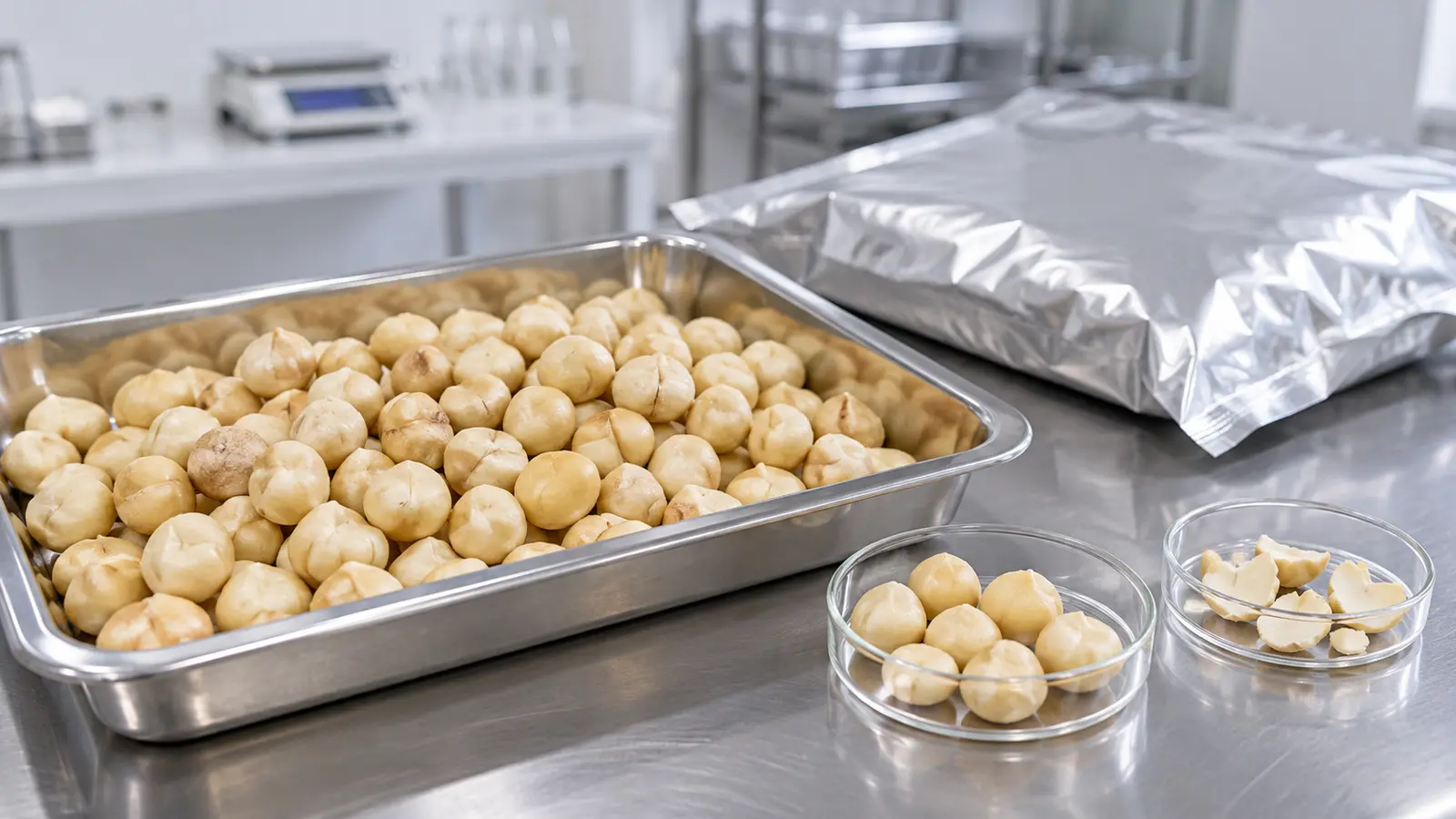
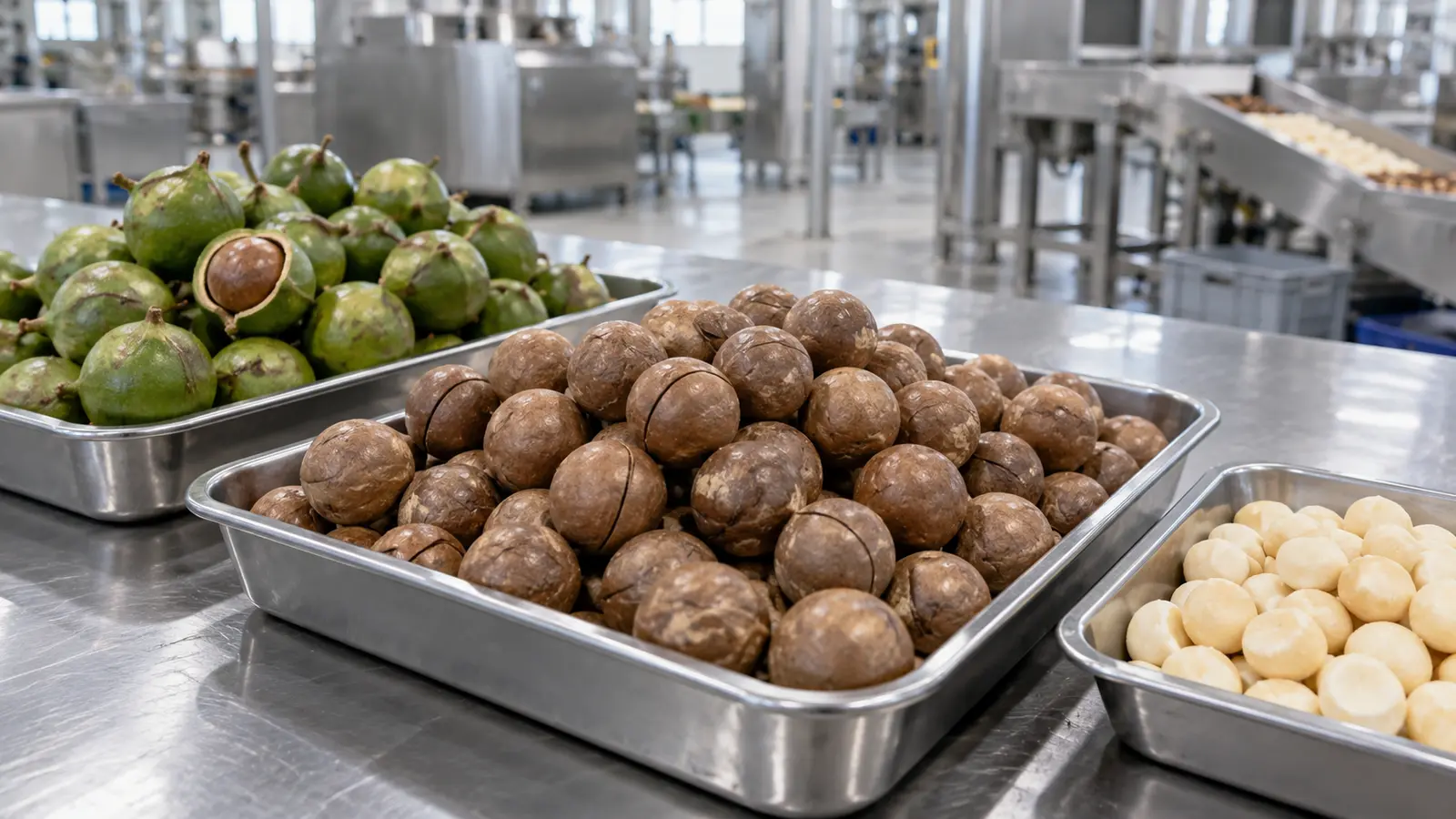
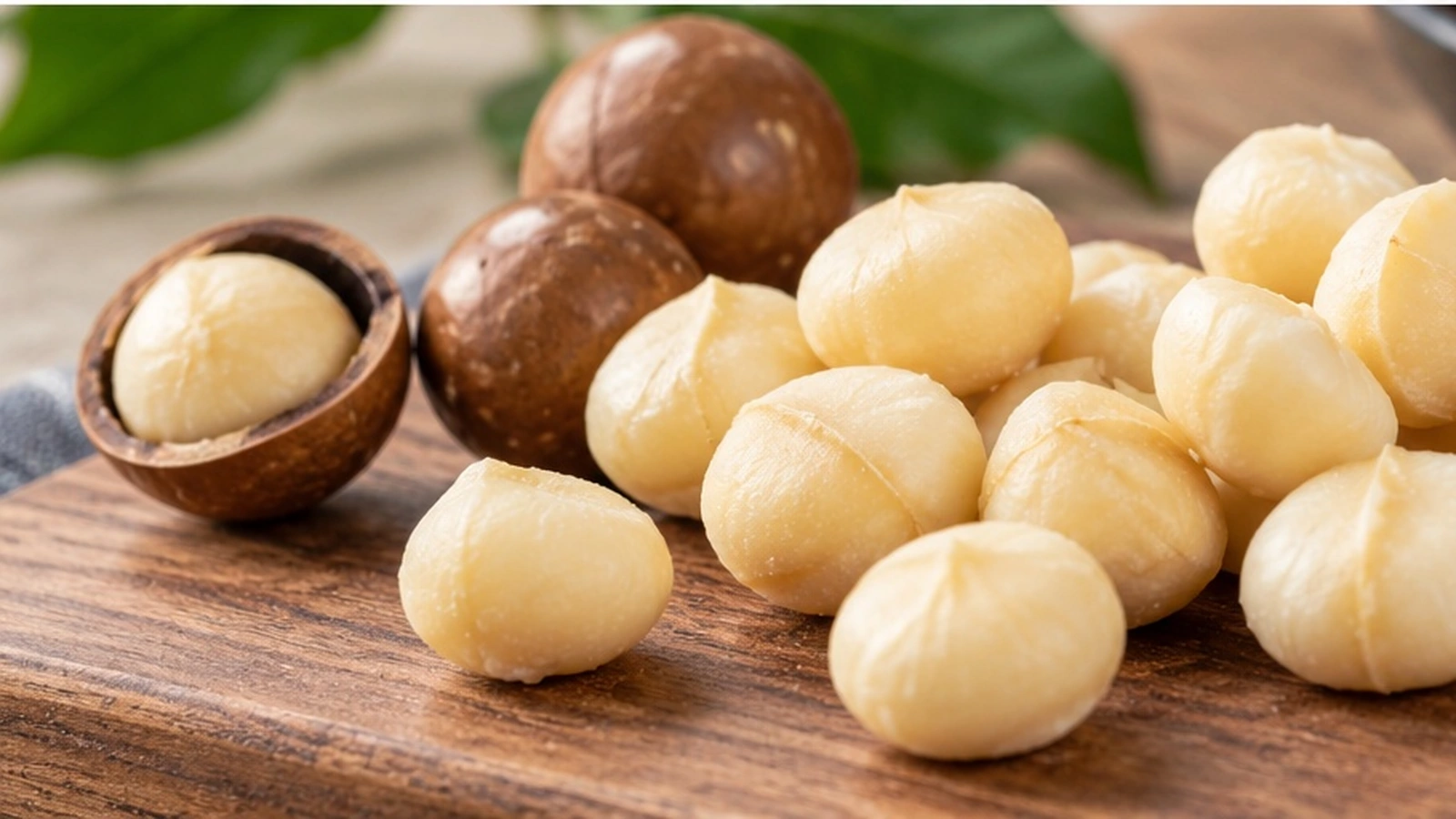
A macadamia fruit moves through several identifiable conditions. The outer husk may still be present after harvest. Removing the husk leaves a hard nut in shell. Cracking the shell produces the edible kernel, which may remain whole or be classified into halves and pieces. Drying, roasting, seasoning and packing create further distinctions.
If an RFQ says only “bulk macadamia,” one supplier may quote in-shell product while another assumes kernels. Even when both quote kernels, one may offer whole dried kernels and another a mixture of whole and broken pieces. The price, shipping weight, processing responsibility, storage needs and buyer yield assumptions will differ. Naming must therefore be linked to the physical state at delivery.
Which Identity Fields Should Bulk Buyers Freeze?
| Identity field | Buyer must state | Why it matters | Supplier evidence |
| Commodity name | Macadamia nut | Creates a common trade reference | Quotation and product description |
| Product form | In husk, in shell or kernel | Defines the supplied material | Sample and specification |
| Processing state | Fresh, dried, raw, roasted or further processed | Changes handling and application | Process description |
| Kernel condition | Whole, halves, pieces or agreed mixture | Affects use and usable yield | Grade schedule and sample |
| Origin | Required country/region or supplier declaration | Prevents a common name becoming an origin claim | Origin documents as required |
| Crop or lot | Required crop period and traceability level | Connects evidence to the shipment | Lot identification |
| Quality limits | Moisture, defects and sensory criteria | Creates an acceptance basis | COA or inspection record |
| Packing | Net weight, liner, carton/bag and label | Protects product and supports handling | Packing specification |
How Should Buyers Distinguish In-Husk, In-Shell and Kernel Product?
In-husk describes harvested product that retains the outer covering. Nut-in-shell has had the husk removed but still retains the hard shell. Kernel is the edible portion after cracking. Buyers should not rely on product photography alone because images can show several stages for illustration.
For in-shell purchases, the RFQ should define whether the product is fresh or dried, the expected shell condition, size or count basis if used, acceptable external defects, moisture basis, sampling method and how kernel recovery or internal defects will be assessed if those factors are commercially relevant. Do not insert a universal yield or moisture figure: the agreed requirement must match the product, intended processing route and applicable buyer standard.
The Shanshui Nut macadamia nut product category separates the available family into in-shell and dried-kernel directions, giving buyers a clearer starting point than a generic commodity name.
Does “Queensland Nut” or “Hawaiian Nut” Prove Origin?
No. A regional common name can be part of historical usage without proving where a commercial lot was grown or processed. Likewise, “Hawaiian macadamia” should be treated as an origin-related claim, not as a casual synonym, unless the supplier can support that claim for the offered lot.
When origin matters, the buyer should state the required country or region and the evidence needed. The supplier should return the actual declared origin and any processing-location details requested. A product should never be relabeled with a geographically meaningful name merely because that phrase has search demand.
When Should Buyers Ask for Botanical Identification?
Many ordinary food orders can be managed with a clear commercial specification and supplier traceability. Botanical identification becomes more relevant when a buyer’s regulation, product claim, formulation, customer specification or technical file requires it. Commercially important edible macadamias are associated with specific Macadamia species and hybrids, but the buyer should not infer a species solely from shape or a common name.
If botanical identity is mandatory, put the exact requirement and evidence expectation in the RFQ. Ask the supplier to confirm what it can document rather than copying a species name from a general webpage. This keeps the technical file connected to the real shipment.
How Should Fresh In-Shell Macadamia Be Specified?
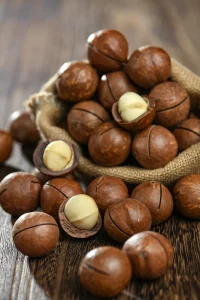
Fresh in-shell product requires a different decision path from ready-to-use kernels. The buyer should describe the intended next step—drying, cracking, roasting, ingredient processing or resale—because this affects which incoming controls matter. Confirm crop or lot, external condition, size basis, moisture basis, acceptable immature or damaged nuts, foreign matter, pest evidence, packaging, ventilation or temperature conditions, shipment timing and inspection method.
Shanshui Nut’s fresh macadamia nuts in shell page establishes the correct product-form direction. The page does not replace a shipment specification. Buyers should still request the precise offered condition, grade, packing and lot evidence in the quotation.
Why Must Product Form Be Connected to Intended Use?
An industrial cracker evaluates in-shell raw material differently from a bakery purchasing whole kernels. A snack packer may care about whole-kernel appearance and flavor, while an oil processor may prioritize a different combination of input quality and usable yield. A distributor may need retail-ready documentation and labeling that an ingredient processor does not.
State the intended use without asking the supplier to guarantee the buyer’s finished process. The supplier can confirm the offered material and agreed evidence; the buyer remains responsible for validating performance in its own cracking, roasting, coating, grinding or packing operation. This distinction avoids treating a successful product description as a guarantee of every downstream result.
What Can Go Wrong When an RFQ Uses Only a Common Name?
The physical product is different
One quote covers nut-in-shell and another covers kernels, so weights and prices cannot be compared.
The processing condition is unclear
“Raw macadamia” may not tell the buyer whether the product has been dried, how it has been handled or which treatment is included.
A regional name is mistaken for origin
A historical synonym is interpreted as a country-of-origin promise without supporting documentation.
Grade language has no measurement basis
Words such as premium, fresh or whole are used without agreed size, moisture, defect, sensory or sampling criteria.
The sample and shipment are not connected
A visually attractive sample is approved, but no lot, grade or acceptance schedule links it to the bulk order.
What Should a Fresh In-Shell Macadamia RFQ Include?
- Commercial product name and required product form.
- Fresh or dried condition at delivery.
- Required origin declaration and supporting document scope.
- Crop, harvest or lot information required by the buyer.
- Size or count basis and agreed measurement method.
- Moisture requirement and test basis.
- External and internal defect limits where applicable.
- Foreign-matter and pest-related acceptance requirements.
- Sampling, sample approval and shipment inspection method.
- Packaging, net weight, labeling and traceability.
- Storage, transport and destination conditions.
- Quantity, delivery destination and required documents.
Send the completed schedule through the bulk macadamia inquiry form. Ask the supplier to respond line by line with Confirmed / Deviation / Alternative / Buyer Input Required. This prevents alternative names from hiding a material difference in product form or quality scope.
Frequently Asked Questions
Is “Queensland nut” another name for macadamia?
Yes, it is a recognized common name, but it should not be used as proof of commercial origin for a shipment.
Are macadamia nuts in shell the same as macadamia kernels?
No. In-shell product retains the hard shell; kernels are the edible portion after cracking. They require different quotation and inspection criteria.
Does “fresh macadamia” define moisture and crop age?
No. “Fresh” is not a complete measurable specification. The RFQ should state the moisture basis, crop or lot information and acceptance method.
Can a buyer approve a bulk order from photos only?
Photos can support identification, but they do not replace a specification, representative sample, lot-linked records and agreed inspection plan.