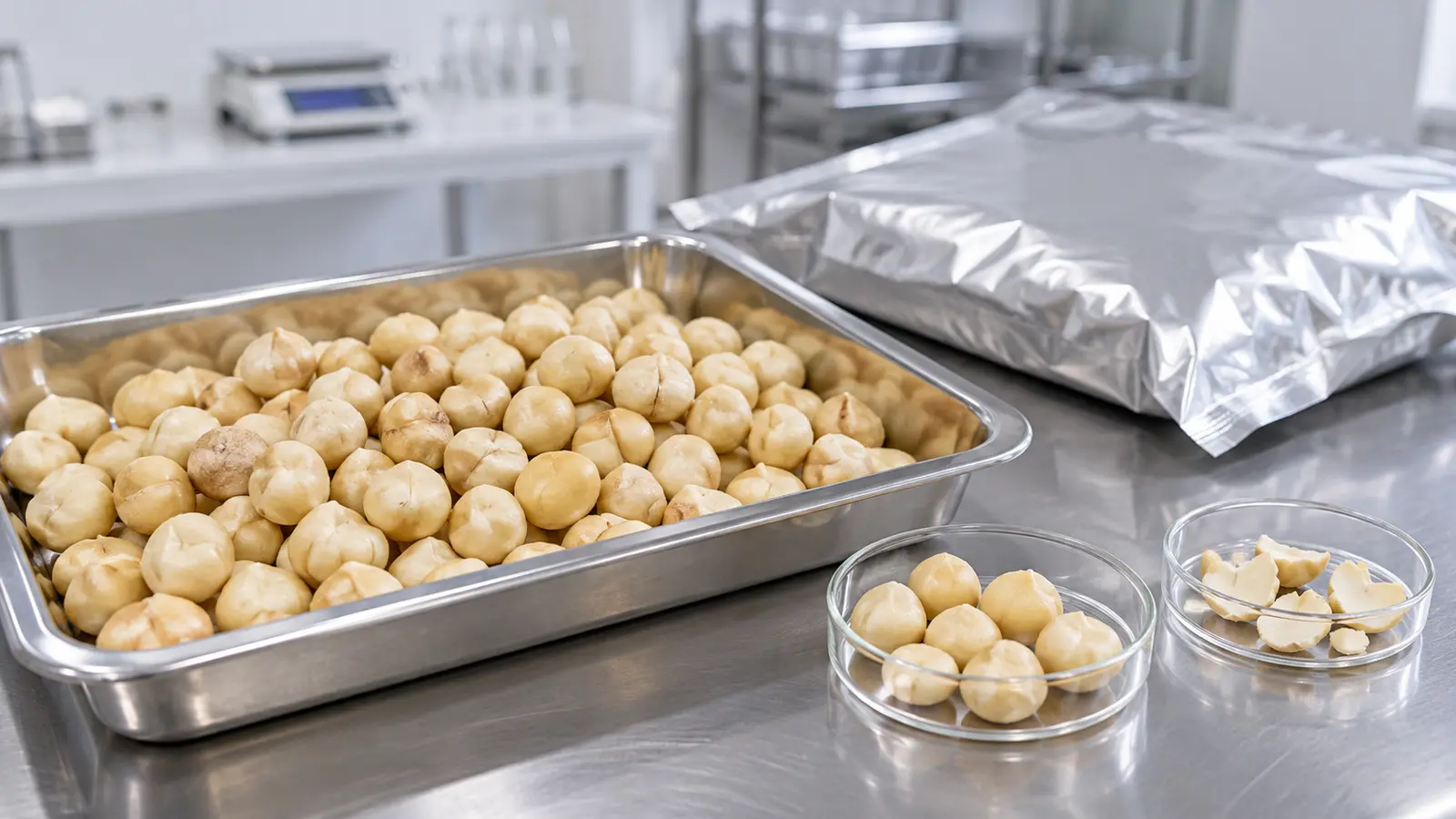
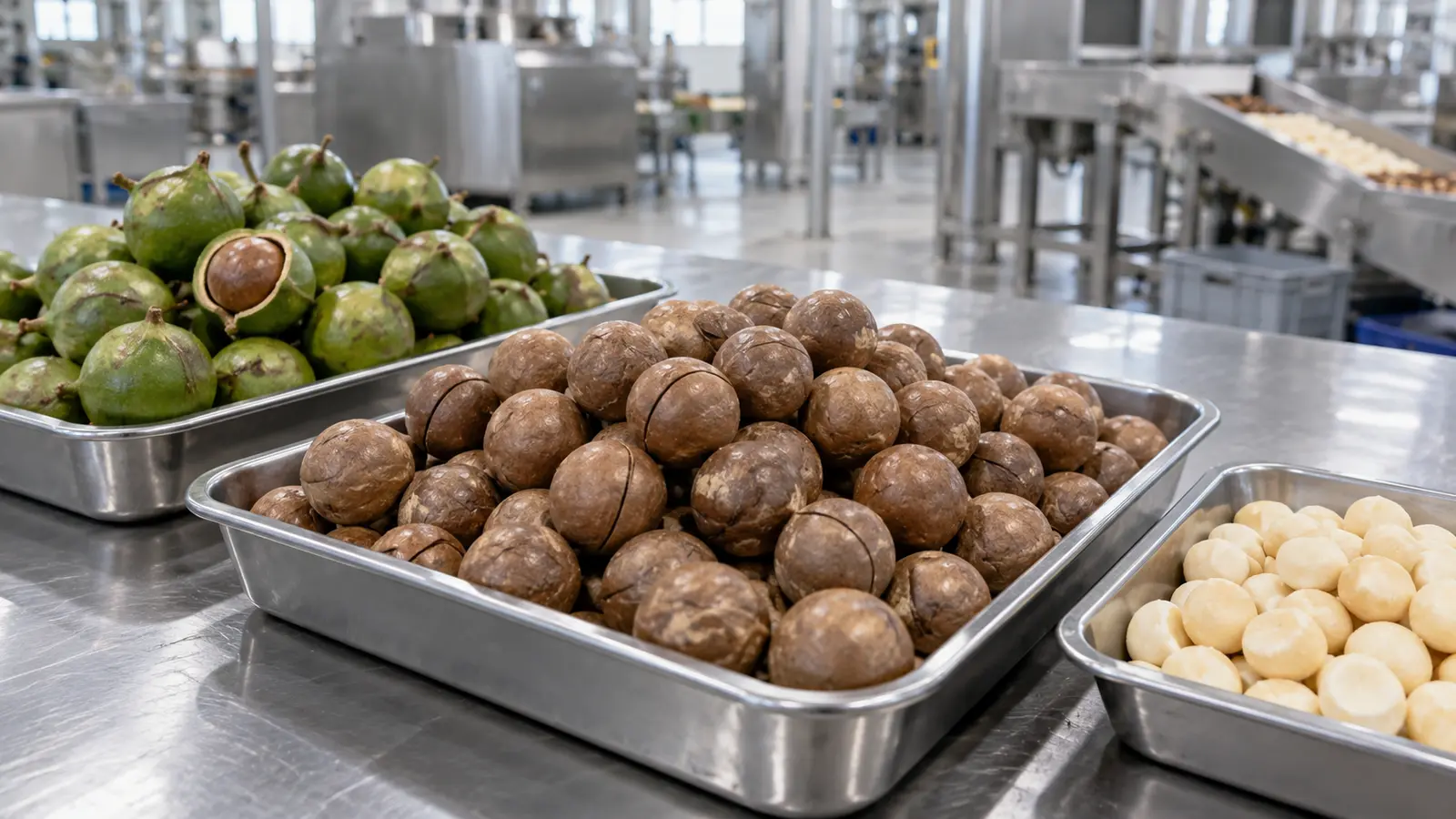
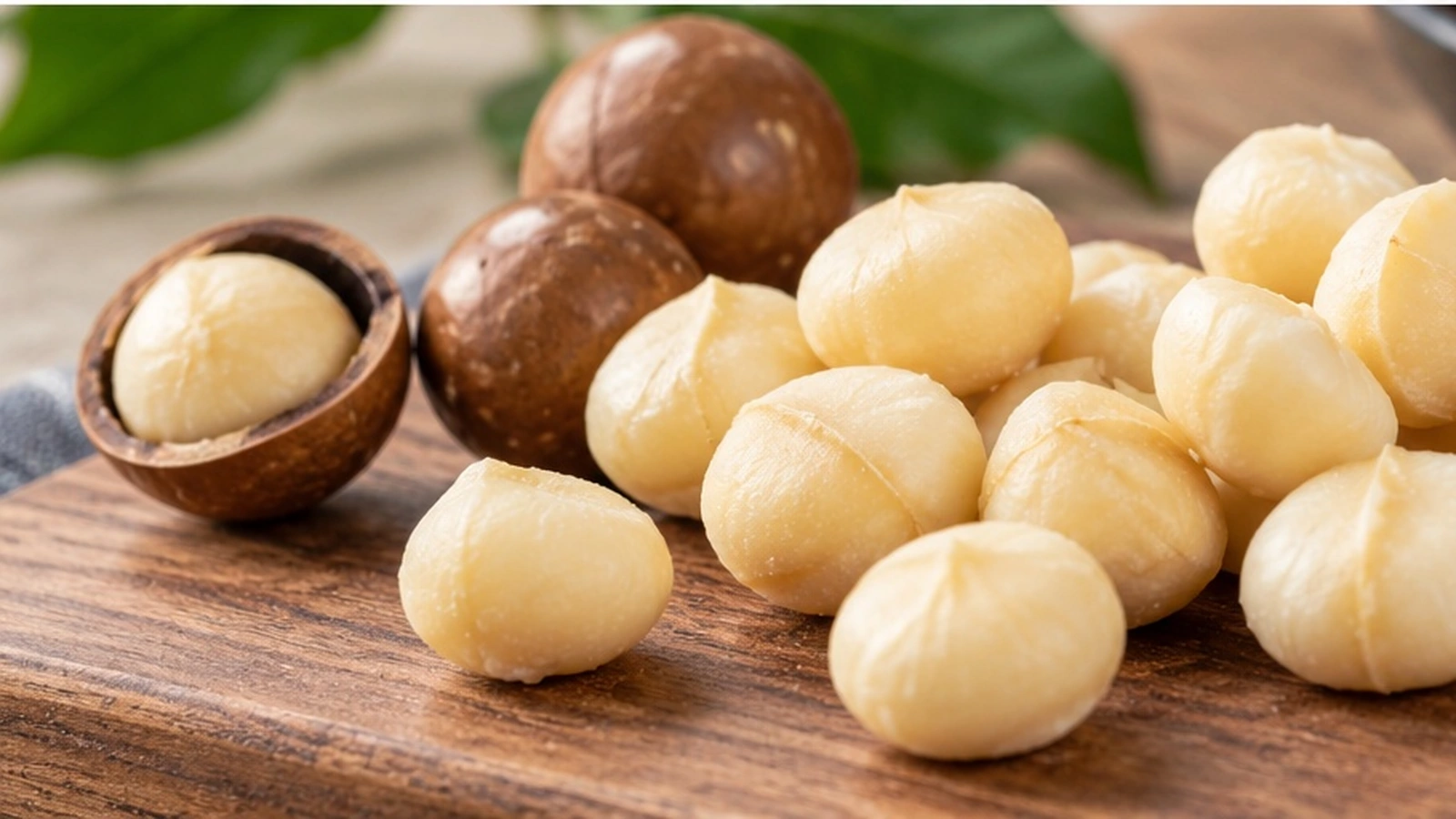
Buyers sourcing bulk dried macadamia nuts should verify the delivered kernel form, whole-versus-broken composition, size or grade basis, moisture requirement, sensory condition, defect limits, food-safety document scope, origin and lot traceability, packaging barrier, storage conditions and sampling plan. “Premium whole dried macadamia nuts” is a useful commercial description, but it is not an acceptance specification by itself. The practical sequence is intended use → kernel grade → measurable quality limits → representative sample → lot-linked evidence → packaging and logistics → arrival inspection. Quotations become comparable only when every supplier prices the same product condition and declares deviations instead of silently substituting another grade or packing format.
Start With the Finished Application, Not the Word “Premium”
A snack brand, chocolate producer, bakery, nut-butter processor and wholesale repacker may all buy dried macadamia kernels, but they do not necessarily need the same grade. Visible whole kernels may be important for premium packs or enrobing. Controlled pieces may be entirely suitable for cookies, toppings, fillings or grinding. Purchasing a visually superior grade for an application that immediately chops the kernel can add cost without adding functional value.
The RFQ should state the final application, whether the kernel remains visible, whether the buyer will roast or season it, and which appearance or process outcomes are critical. This gives the supplier a reasoned basis for proposing a grade while keeping the buyer in control of substitutions.
What Does “Whole Dried Macadamia” Need to Define?
“Whole” should be tied to an agreed grading or inspection basis. A shipment may contain whole kernels together with allowable halves, chips or breakage created during handling. The buyer should define the acceptable composition, how samples will be taken, and how pieces are classified. Avoid relying on a hero photograph to define the grade.
“Dried” also needs a measurable basis. Confirm the moisture requirement, test method, sampling point and whether results are reported for the supplied lot. Drying affects texture, storage behavior and subsequent roasting, but a single universal target should not be invented for all products or markets. The correct limit comes from the buyer’s specification, applicable requirements and the supplier’s confirmed process capability.
Which Variables Should Buyers Compare Across Offers?
| Decision variable | Buyer input | Supplier confirmation | Acceptance evidence |
| Kernel form | Whole, halves, pieces or blend | Offered grade composition | Specification and sample |
| Size basis | Required sizing system if applicable | Actual grade and method | Inspection record |
| Moisture | Limit and method | Lot result and test basis | COA/test report |
| Defects | Limits for discoloration, damage and foreign matter | Agreed defect schedule | Sampling report |
| Sensory quality | Appearance, aroma, flavor and texture criteria | Reference sample or description | Approved sample |
| Processing state | Raw/dried or further processed | Included treatment | Process declaration |
| Lot identity | Traceability requirement | Lot and crop information | Lot documents |
| Packaging | Unit weight, liner/barrier and label | Exact offered pack | Packing specification |
Why Should Moisture and Sensory Condition Be Reviewed Together?
A laboratory result and a sensory review answer different questions. Moisture is a measured property under a defined method. Sensory inspection evaluates whether appearance, aroma, flavor and texture meet the agreed product profile. Neither automatically proves the other.
For approval, define who assesses the sample, whether it is evaluated as received or after a specified preparation step, and how the reference is retained. Off-odors, rancid notes, unexpected softness, excessive discoloration or other agreed defects should have a documented disposition process. Avoid vague instructions such as “must taste fresh” without a sampling and approval basis.
How Should Defects and Breakage Be Specified?
Defect schedules should match the buyer’s application and market. Relevant categories may include broken kernels, shriveled or immature material, discoloration, insect or mold evidence, foreign matter and other buyer-defined defects. The article cannot set universal numerical limits because product grades, regulations and end uses differ.
Ask the supplier to return its proposed definitions and inspection method. Then align terminology before pricing. If one supplier counts a half kernel as acceptable whole product and another records it as breakage, their percentages cannot be compared without normalization.
What Food-Safety and Compliance Evidence Should Be Requested?
Document requirements must follow destination law, buyer policy and product risk. Depending on the transaction, buyers may request a specification, certificate of analysis, lot traceability, origin documentation, allergen statement, microbiological or contaminant results, pesticide-residue evidence, process declarations or third-party certificates. The exact set should be agreed rather than assumed.
Do not treat a company-level certificate as proof that every shipment meets every lot requirement. Conversely, do not request unrelated documents merely to make the file appear more complete. Each item should answer a defined acceptance or regulatory question and identify whether it is supplied per lot, per product or periodically.
The bulk macadamia nuts category helps buyers identify the relevant product family before building the order-specific evidence schedule.
How Should Packaging Protect Dried Kernels?
Macadamia kernels contain oils that make protection from oxygen, moisture, heat, contamination and physical damage important. The buyer should define package type, food-contact liner or barrier requirement, net weight, sealing method, outer carton or bag, palletization, label content and any special atmosphere requirement. The supplier must confirm what is actually offered.
Package size should fit consumption rate after opening. A large pack may reduce packaging cost but increase exposure during the buyer’s operations. The quotation should distinguish standard packing from requested upgrades and state whether pallets, desiccants, vacuum or gas-flush measures are included—only when applicable to the offered product.
Why Do Storage and Transit Conditions Belong in the RFQ?
Quality at dispatch does not by itself guarantee quality after a long or poorly controlled journey. Provide destination, shipping mode, expected transit duration, seasonal temperature exposure, warehouse conditions and required shelf-life basis. Ask the supplier for the recommended storage condition and the shelf-life statement applicable to the exact packaging offered.
Clarify responsibility for container condition, loading, pallet protection and arrival inspection. If temperature or humidity monitoring is required, define the device, placement, record ownership and acceptance response before shipment rather than after a dispute.
How Should Buyers Use Samples Without Creating a False Guarantee?
A sample supports product selection only when it represents a defined grade and condition. Label it with supplier, product, lot or sample reference, date, processing state and packing. Record the observations and the approved specification revision. If the commercial shipment will come from another lot, state which attributes the sample controls and which are verified by shipment inspection.
A successful baking or roasting trial shows performance under that particular process. It does not replace verification of the bulk lot’s grade, moisture, defects, traceability or documents. Likewise, a compliant COA does not prove the buyer’s finished recipe will behave exactly as expected. Use both material evidence and application trials for their proper purposes.
How Should Buyers Evaluate Shanshui Nut’s Dried Macadamia Offer?
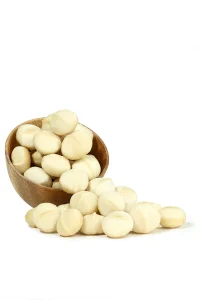
Shanshui Nut’s premium whole dried macadamia nuts page identifies a kernel product intended for direct consumption and food applications such as desserts, baking and sauces. It provides a valid product-discovery entry, but the purchase order should not rely on descriptive terms alone.
Request the exact kernel grade, whole/broken definition, size basis if applicable, processing condition, moisture and defect limits, packing, lot documentation and inspection method for the offered shipment. If an option differs from the buyer’s request, it should be presented as an alternative rather than quietly treated as equivalent.
What Common RFQ Gaps Make Dried-Kernel Quotes Misleading?
Whole-kernel content is not defined
Suppliers quote visually different compositions under the same commercial name.
Moisture is requested without a test basis
Results cannot be compared because methods or sampling points differ.
“Premium” replaces measurable criteria
There is no objective rule for breakage, discoloration, defects or sensory acceptance.
Packaging is excluded from the quality decision
The kernel may meet specification at packing but lack the agreed protection for the route and storage period.
Documents are not linked to the lot
Generic reports are supplied without demonstrating which shipment they represent.
What Should a Bulk Dried Macadamia Nut RFQ Include?
- Final application and whether kernels remain visible.
- Whole, halves, pieces or agreed grade composition.
- Size or grade basis and inspection definitions.
- Raw/dried, roasted or other processing condition.
- Moisture limit, sampling and test method.
- Defect categories, limits and classification rules.
- Sensory criteria and sample-approval procedure.
- Origin, crop and lot traceability requirements.
- Food-safety, compliance and shipment document list.
- Inner and outer packaging, net weight and labels.
- Storage, shelf-life and transit expectations.
- Quantity, delivery destination and inspection terms.
Provide this schedule through Shanshui Nut’s dried macadamia quotation form. Require the response format Confirmed / Deviation / Alternative / Buyer Input Required, and approve the specification and sample basis before releasing the bulk order.
Frequently Asked Questions
Does “whole dried macadamia” mean zero broken kernels?
Not automatically. The buyer and supplier need an agreed grade definition, tolerance and sampling method.
Can one moisture limit be used for every macadamia product?
No universal figure should be assumed. The requirement must match the product condition, buyer specification, applicable rules and agreed method.
Is an approved sample enough for shipment acceptance?
No. It should be combined with a controlled specification, lot-linked records and an agreed shipment sampling plan.
What makes two dried macadamia quotations comparable?
The offers must cover the same grade composition, processing state, quality limits, packing, evidence, quantity, logistics scope and deviation basis.