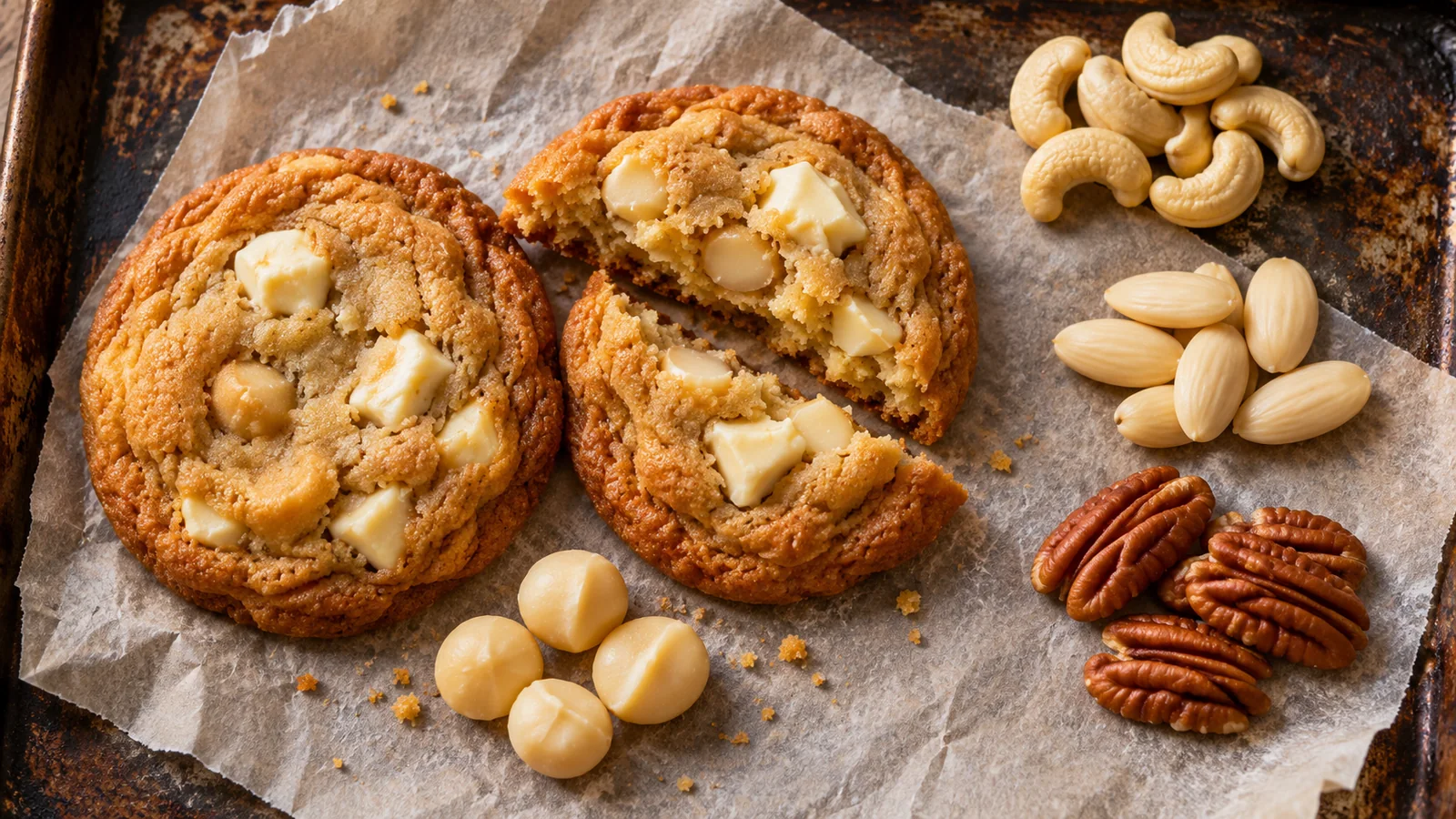
Unsalted cashew pieces are the first substitute to try in a white chocolate macadamia cookie. Their light color and mild, buttery flavor give a baker a useful starting point. A blanched almond is a better first trial when the buyer wants a pale piece with a firmer crunch. A pecan suits a toasted cereal cluster where its darker color and more distinctive flavor are welcome. An intact macadamia has a rounded shape and a relatively tender bite that none of these alternatives reproduces exactly.
For a buyer asking “what is close to macadamia nuts?” the most useful sample brief names the feature customers would miss: the nut flavor in the dough, the pale cross-section in chocolate, or the bite of a whole kernel.
Choose the substitute by what the customer notices
| Finished product | First candidate | What would make the trial fail? |
| White chocolate cookie | Unsalted cashew pieces in a comparable cut | The nut disappears behind the chocolate, or the pieces feel noticeably softer than the approved cookie after packing. |
| Thin chocolate bark | Blanched almond pieces | Coarse pieces dominate the bite or break out of the slab when it is snapped. |
| Toasted granola clusters | Pecan pieces | Small fragments darken at the edges or sift to the bottom of the pouch instead of staying in the clusters. |
In a cookie, the chocolate and the nut are eaten together. Taste the cooled cookie before judging how close the cashew comes. In bark, thickness matters as much as species. A large almond fragment in a thin slab can give an uncomfortably hard bite even if the panel likes its flavor. A second test with a smaller cut can tell the buyer whether the objection is to the almond or simply to the size of the piece.
Granola poses a different problem. A pecan may taste excellent out of the oven while too little of it reaches the customer in the intended form. Tip a packed sample into a tray and examine the last portion as well as the first. A handful of loose fines at the bottom is a reason to revisit the cut or the point at which the nuts enter the mix.
Run a side-by-side bake before ordering
For a white chocolate cookie, begin with one dough and divide it into equal portions before adding the nuts. Use 200 g of the approved macadamia cut in one portion and 200 g of cashew pieces in the other. Match the approximate piece size, salt level and roast state. Keep the chocolate, dough portion weight, oven settings and cooling time the same. A comparison between dark-roasted cashews and lightly roasted macadamias would leave the team guessing whether it preferred the nut or the roast.
Agree on the acceptance criteria before tasting. If customers expect visible pieces, break open cookies taken from different positions on the tray. If the selling point is the buttery flavor, taste coded samples with the same amount of chocolate in each bite. Ask the panel to record two judgments separately: “Do I like this cookie?” and “Does it deliver the nut character our customer approved?” A different recipe can win the first question and lose the second.
Keep some cookies in the normal pack until the team’s usual quality checkpoint. Compare the bite again and record any breakage during packing. If flavor is acceptable but too few pieces show up in each cookie, test a different cut before increasing the inclusion weight. Adding more nut changes both the recipe and the cost.
Procurement can then compare the price of pieces that will actually go into production. Consider two illustrative delivered quotes, with fines having no value in this recipe:
| Trial lot | Delivered price | Share passing the agreed size screen | Cost per kg of usable pieces |
| Lot A | $10.00/kg | 95% | $10.53 |
| Lot B | $9.50/kg | 85% | $11.18 |
Divide delivered price by the usable fraction. Lot B looks cheaper on the invoice but costs about $0.65 more per usable kilogram. If the plant can use the fines in another product, credit that value before comparing again. Neither quote represents a current market price.
When keeping macadamia is the better choice
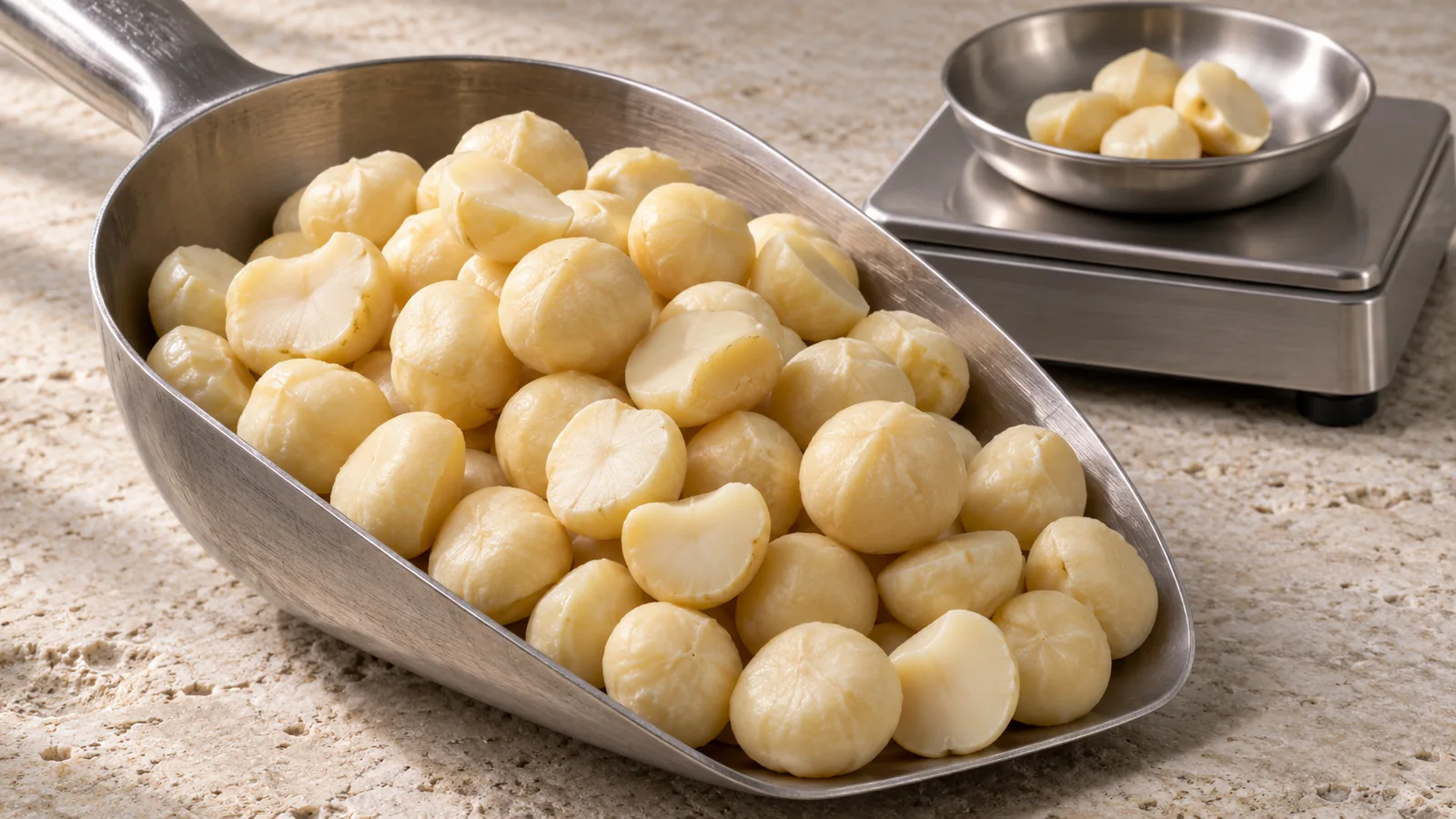
If customers buy a product for its macadamia name or the appearance of a whole kernel, changing species alters what they are buying. A bakery that chops every kernel on arrival has another option: ask for a macadamia cut that matches the mixer and the desired piece count. A chocolatier enrobing one whole nut at a time has a stronger reason to retain a whole-kernel specification.
The World Macadamia Organisation’s style guide distinguishes whole kernels, halves, pieces and fines. For example, its Style 6 covers pieces in the 5–9 mm range. That is a useful reference for discussing a cookie trial. Put the intended size range, acceptable fines and roast state on the sample request, and ask the supplier to confirm what it can offer. A style number alone does not tell the bakery how many visible pieces will survive its mixing step.
Use LIRENMEI’s whole dried macadamia nuts as the original product reference when discussing a sample. A useful brief might read: “The nut must remain visible in a white chocolate cookie after mixing and baking. We currently chop whole kernels. Can you quote a comparable macadamia piece and provide its size distribution so we can test it against our current cut?”
If another species wins approval, pass the specific nut name, revised ingredient statement and supplier allergen information to the packaging team before ordering printed film. For U.S. distribution, FDA guidance identifies almonds, cashews, macadamias and pecans individually as tree nuts relevant to major-allergen labeling. A successful bake trial settles the recipe question; the product name, ingredient declaration and allergen information still need to match the ingredient purchased.
References — World Macadamia Organisation kernel style guide, Betty Crocker’s guide to baking with nuts and FDA food allergen labeling guidance, Edition 5.